
Choosing the best time to visit Kerid Crater
The best time to visit Kerid Crater is the part of your trip when available daylight, road conditions and your walking plans fit together. A view from the rim and a walk down towards the lake make different demands on your time and footing. Start with the experience you want, then leave enough room in the day for travel, photographs and a change of plan.
The operator describes access in terms of daylight rather than a precise daily timetable. Use daylight as a planning boundary and check the current access arrangements for your date. A long light evening should not be treated as permission to enter at any hour. For the separate questions of admission, paths and booking, see the Kerið entry guide.
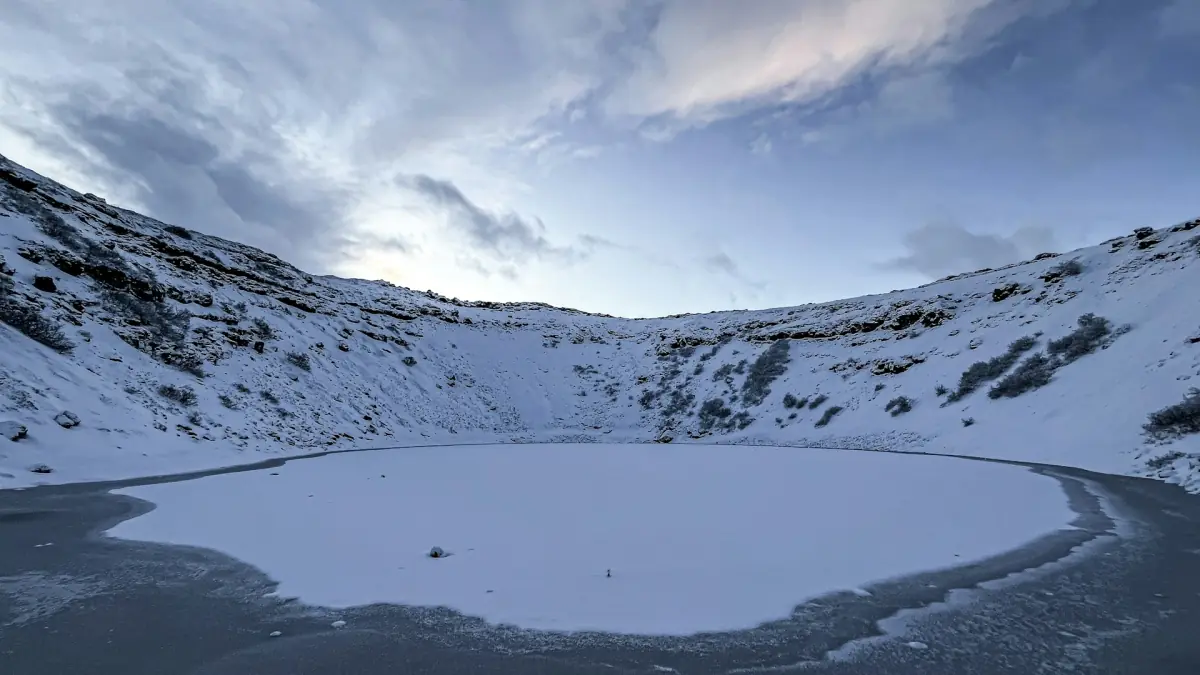
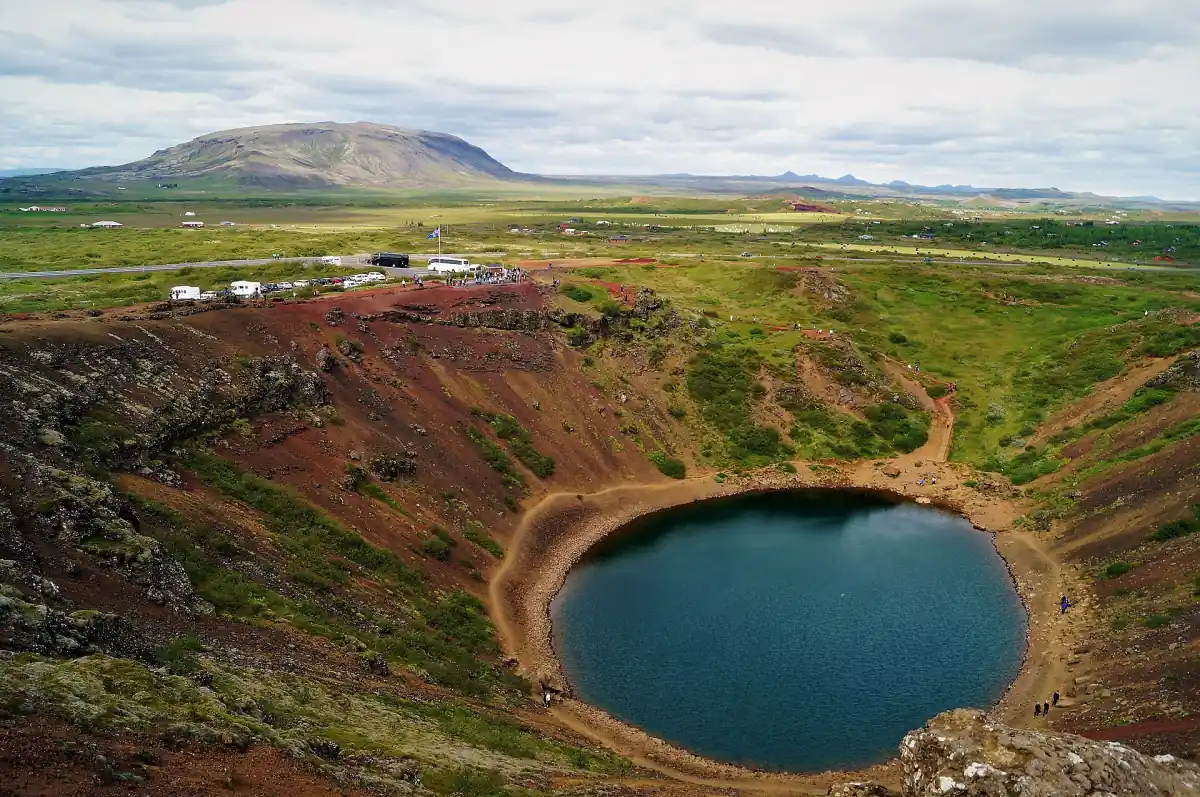
Summer and winter as planning choices
Summer's longer daylight makes it easier to spread travel and sightseeing across the day. That flexibility is useful if you want time at the rim, a possible descent and unhurried photographs. Keep the actual visit tied to the site's access arrangements and your weather forecast. Longer daylight is not a promise of clear skies, dry paths or a particular photographic result.
In winter, shorten the list of stops rather than forcing the same schedule into a smaller daylight window. Road conditions can change quickly, and walking may take longer when surfaces are slippery. Keep the descent optional and allow extra time to return to your accommodation. A bus excursion can remove the task of driving from your own day, while its operation still depends on conditions.
Visit Kerið by bus
A guided bus trip with hotel pickup offers an alternative to driving yourself.
Hand-picked tours, booked through GetYourGuide. Prices are indicative starting prices in euros (as of October 2026). Tap a tour for live availability and the current price in your currency.
Visit Kerið without driving yourself
This guided bus excursion includes hotel pickup and drop-off and a visit to Kerið, offering an alternative to arranging your own drive.
Weather and what to pack
Build your decision around the forecast for the visit and the condition of your route. Bring windproof and waterproof clothing, a hat, gloves and a phone even for a short walk. Suitable shoes matter on the crater paths; icy steps may call for footwear with spikes. Prepare for the outdoor stop itself, rather than dressing only for a warm vehicle or an indoor break later in the day.
Keep seasonal climate expectations separate from the weather you will actually meet. For deciding whether to descend, the immediate condition of the steps is more useful than an average temperature for a distant city. If the route feels unsuitable for your experience or equipment, revise the walking plan. Seeing the landform from above can remain the focus instead of treating the lake shore as a compulsory destination.
Winter roads and realistic travel time
Kerið is reached via roads 1 and 35. Tourist driving estimates put it about an hour from Reykjavík and about 15 minutes from Selfoss, but those are planning references rather than winter arrival promises. Allow for the exact starting point, weather and road conditions. The getting-there guide explains the transport choices without treating a regional bus connection as a direct service to the entrance.
Check current road information through Umferðin and the weather and travel advice from SafeTravel before setting off. Four-wheel drive does not remove the risk of sliding on ice. Adapt speed and following distance to the conditions, and keep your return flexible. Choosing fewer destinations gives you room to spend time at Kerið instead of measuring the success of the day by how many stops you complete.
Photographs, light and the lake descent
Plan photographs around usable daylight and the conditions in front of you, without relying on a universally ideal clock time. Leave room to look at the crater before deciding which views to concentrate on. A photograph of snow or a frozen lake describes a landscape, not safe access to the ice. Keep your visit on the appropriate visitor paths and follow the conditions and instructions you encounter.
A tourist orientation is about 25 to 30 minutes for a rim walk and roughly an hour when combining rim and lake. These are approximate visiting times, not a timed route or guaranteed walking speed. Add room for photographs, cautious footing and any decision to turn back. You can read about the crater's shape and groundwater lake on the history and formation page before arriving.
Fit Kerið into your wider stay
The guided bus option on this page lasts about 8 hours and includes return bus transport, hotel pickup and drop-off, a guide, Wi-Fi and USB charging onboard, and a visit to Kerið. Its timetable belongs to the whole excursion, not just the crater stop. Choose it when you want organised transport and are comfortable following a shared day's schedule.
Your base also influences how much flexibility you have. Compare Selfoss, Hveragerði, Grímsnes and Reykjavík by your transport plans. For the broader seasonal context beyond this crater, see Seasons and daylight in Iceland. Keep the local decision practical: suitable light, a workable journey and a walk that fits the conditions are more useful than choosing a month on reputation alone.
Questions about timing a Kerið visit
Is summer the only sensible choice?
Choose according to daylight, the current weather and roads, and the walking you want to do. Summer offers more daylight flexibility; winter needs a shorter schedule and extra margin.
Can I rely on night access for photographs?
Plan the visit in daylight within the current access arrangements. The operator's daylight wording does not provide a night-entry timetable or an aurora photography booking.
Should I allow an hour at the crater?
About an hour is a tourist orientation for rim and lake together. Weather, photographs, your chosen route and icy footing can change the time you need.